Introduction
In today’s competitive job market and rapidly evolving industries, continuous learning is more than a choice—it’s a necessity. That’s where a skills development facilitator steps in. Whether you’re an employer trying to build a capable workforce or an individual seeking career growth, understanding the role of a skills development facilitator can be a game-changer. This article explores who they are, what they do, and why their role is essential in modern workforce development.
What Is a Skills Development Facilitator?
A skills development facilitator (SDF) is a trained professional responsible for promoting, coordinating, and reporting on skills development within an organization. In simple terms, they act as a bridge between employees, employers, and educational bodies to ensure that workplace learning is structured, impactful, and aligned with national or sectoral training strategies.
In countries like South Africa, the skills development facilitator plays a formal role in implementing Skills Development Act programs, including compiling Workplace Skills Plans (WSP) and Annual Training Reports (ATR) to submit to Sector Education and Training Authorities (SETAs).
But globally, their role is expanding to include learning & development (L&D), coaching, mentorship, and workforce transformation initiatives.
Why Is a Skills Development Facilitator Important?
1. They Align Training with Business Goals
A skills development facilitator doesn’t just run workshops—they ensure that training leads to measurable business outcomes. By aligning employee development with company objectives, they maximize productivity, reduce turnover, and support long-term growth.
2. They Identify Real Skills Gaps
Through audits, surveys, and skills assessments, an SDF identifies where your team is lacking and what kind of training would yield the best results. This insight is crucial to avoid wasted time and resources.
3. They Ensure Compliance and Access to Grants
In many regions, businesses must submit training reports to receive funding or comply with labor regulations. A skills development facilitator handles this paperwork, ensuring the business is eligible for grants, rebates, or tax benefits.
Key Responsibilities of a Skills Development Facilitator
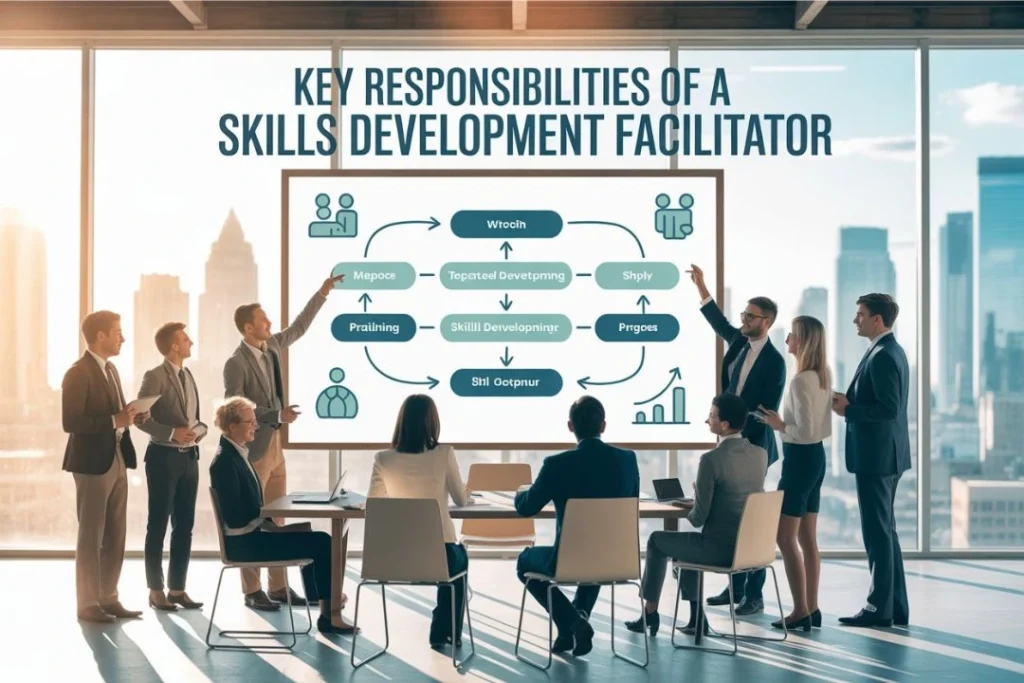
Let’s break down the core tasks of an SDF:
📌 1. Conducting Skills Audits
An SDF assesses current employee competencies versus required skills, identifying gaps through interviews, performance reviews, or industry benchmarks.
📌 2. Creating a Workplace Skills Plan (WSP)
A crucial annual document submitted to SETAs (in regions like South Africa), the WSP outlines planned training activities, funding requests, and the business’s commitment to upskilling.
📌 3. Coordinating Training Programs
An SDF liaises with training providers, books workshops, tracks attendance, and evaluates learning outcomes. They often assist in choosing accredited courses that lead to qualifications or credits.
📌 4. Submitting Annual Training Reports (ATR)
Along with the WSP, an ATR is submitted to show completed training. This allows organizations to claim back a portion of their skills development levies.
📌 5. Advising Management
An experienced skills development facilitator is also a strategic advisor—helping leadership teams decide where to invest in upskilling, reskilling, or digital learning tools.
Qualifications and Skills Needed to Become a Skills Development Facilitator
To become a skills development facilitator, individuals typically need:
- A qualification in Human Resources, Education, Training, or Industrial Psychology
- A registered SDF certification (such as ETDP SETA accreditation in South Africa)
- Strong communication and interpersonal skills
- Knowledge of national qualifications frameworks (like NQF)
- Understanding of compliance, learning technologies, and training needs analysis
Where Do Skills Development Facilitators Work?
You’ll find skills development facilitators working across:
- Corporates and Enterprises (HR/L&D departments)
- NGOs and Educational Institutions
- Government and Public Sector Training Bodies
- Freelance or Consultancy roles
- Skills Development Providers (SDPs)
Some are full-time employees, while others operate independently as consultants, working across several clients and industries.
Benefits of Having a Skills Development Facilitator in an Organization
- ✅ Improved productivity through targeted training
- ✅ Enhanced employee engagement and retention
- ✅ Access to skills development grants or subsidies
- ✅ Compliance with national education or labor laws
- ✅ Long-term workforce planning and leadership development
Real-World Example: The Impact of an SDF
Let’s take a medium-sized logistics company struggling with high driver turnover and safety issues. By hiring a skills development facilitator, they conducted a needs analysis, rolled out driver safety training, and enrolled supervisors in leadership workshops. Within one year, accidents dropped by 40%, and employee satisfaction rose by 25%.
This shows that the SDF role is not just administrative—it’s transformational.
Frequently Asked Questions
Q: What is a skills development facilitator’s main purpose?
A: Their main purpose is to ensure continuous learning within the organization by identifying skill gaps, planning relevant training, and aligning those programs with business goals and national training standards.
Q: Do I need to hire a registered SDF?
A: Yes, especially if you’re claiming back grants through programs like SETAs. Registered SDFs understand the documentation and compliance requirements involved.
Q: Can one person be an SDF for multiple companies?
A: Absolutely. Many SDFs work as consultants, serving multiple clients, especially small to mid-sized businesses that don’t need a full-time learning and development specialist.
Conclusion
A skills development facilitator plays a vital role in shaping a knowledgeable, efficient, and future-ready workforce. From planning training to handling compliance and funding, the SDF ensures that your organization’s investment in people is strategic and impactful.
If you’re a business owner, hiring or partnering with a qualified skills development facilitator could be the smartest move you make this year. And if you’re considering becoming one yourself, now is a great time—demand for skilled facilitators is growing across industries.