Introduction to Image Recognition
Technology has changed the way people interact with the world, and image recognition is one of the most exciting developments in this digital age. From unlocking smartphones with facial recognition to identifying objects in photographs, this technology has become an important part of everyday life. Although many people use it without realizing it, image recognition is working behind the scenes in numerous applications and digital services.
Image recognition is a technology that allows computers and artificial intelligence systems to identify objects, people, places, animals, and other elements within images. Instead of simply displaying a photograph, a computer can analyze its contents and recognize meaningful information. This ability makes image recognition useful in industries such as healthcare, education, retail, transportation, agriculture, and security.
As artificial intelligence continues to improve, image recognition is becoming faster, more accurate, and more accessible. Understanding how this technology works, where it is used, and what benefits it offers can help us appreciate its growing importance in modern society.
What Is Image Recognition?
Image recognition is a process in which a computer system analyzes an image and identifies the objects, patterns, or features it contains. It commonly uses artificial intelligence, machine learning, and computer vision to interpret visual information.
For example, when you upload a photograph of a dog to an image recognition application, the system may identify the animal as a dog. More advanced systems can recognize the breed, detect its location within the image, or distinguish it from other animals in the same photograph.
Human beings can recognize familiar objects almost instantly because the brain processes visual information naturally. Computers, however, must learn to identify patterns through algorithms and training data. These systems examine details such as shapes, colors, textures, edges, and relationships between different parts of an image.
Image recognition is closely related to computer vision, but the two terms do not mean exactly the same thing. Computer vision is a broader field that enables machines to process and understand visual information. Image recognition is one of its important applications.
How Does Image Recognition Work?
The image recognition process involves several steps that help a computer transform visual information into useful results. Although the exact process depends on the technology being used, most systems follow a similar approach.
1. Image Collection
The first step involves collecting images that the system needs to analyze. These images may come from smartphone cameras, security cameras, medical equipment, online databases, or other digital sources.
For instance, a system designed to identify different types of flowers might use thousands of photographs showing roses, sunflowers, tulips, and other varieties.
2. Image Processing
Before analyzing an image, the system may improve its quality or prepare it for further processing. This stage can include resizing images, adjusting brightness, reducing noise, and standardizing image formats.
Proper preparation helps the system focus on relevant details and reduces the impact of unnecessary visual information.
3. Feature Detection
The system examines important characteristics within an image. These characteristics may include edges, shapes, textures, colors, and more complex visual patterns.
Modern deep learning systems can automatically learn useful features from training data instead of relying entirely on manually designed rules.
4. Model Training
Machine learning models are trained using examples. During training, the system compares its predictions with the correct labels and gradually adjusts its internal parameters to improve performance.
For example, a model trained to recognize cats and dogs learns from many labeled images until it becomes better at distinguishing between the two animals.
5. Image Classification and Prediction
After training, the model can analyze new images and predict what they contain. Depending on the application, it might classify an image, identify several objects, locate a face, or detect a particular feature.
The final result may include a predicted label and a confidence score. However, a high confidence score does not always mean that the prediction is correct.
Common Types of Image Recognition
Image recognition includes several techniques designed for different purposes. Each technique addresses a particular visual identification task.
Image Classification: This method assigns a category to an entire image. For example, a system may classify a photograph as a landscape, portrait, vehicle, or animal.
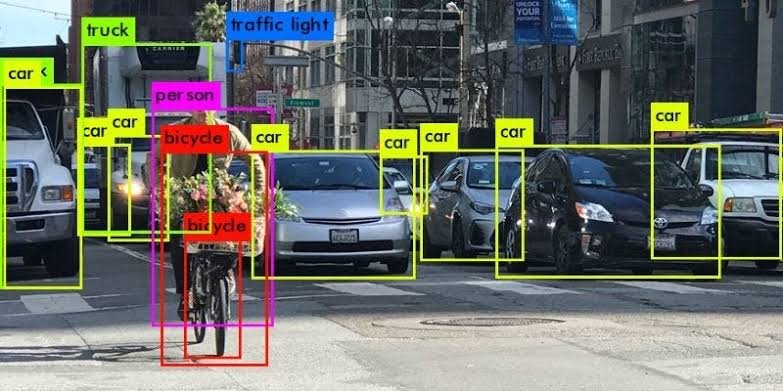
Object Detection: Object detection identifies individual objects and determines their locations within an image. It is commonly used in traffic monitoring, robotics, and security systems.
Facial Recognition: This technology analyzes facial characteristics to verify identity or compare faces. It is used in certain smartphone authentication systems and security applications, although its use raises important privacy concerns.
Optical Character Recognition (OCR): OCR extracts written or printed text from images. It can convert scanned documents, photographed receipts, and printed pages into searchable digital text.
Image Segmentation: Image segmentation divides an image into meaningful regions or identifies individual pixels belonging to particular objects. It is especially useful in medical imaging and autonomous systems.
Real-World Applications of Image Recognition
Image recognition is no longer limited to research laboratories. It is already helping businesses, professionals, and ordinary users solve practical problems.
Healthcare and Medical Imaging
In healthcare, image recognition can assist professionals in analyzing X-rays, MRI scans, CT scans, and other medical images. AI systems can highlight suspicious patterns that may require further examination.
For example, a trained model might help identify signs associated with certain lung conditions or abnormalities in medical scans. These tools can support clinical workflows, but they are not a substitute for qualified medical professionals. Their performance must be carefully evaluated before they are used in patient care.
Retail and Online Shopping
Retailers use image recognition to improve product discovery and shopping experiences. Customers can upload a picture of a handbag, pair of shoes, or piece of furniture and search for visually similar products.
Businesses can also use the technology to monitor shelves, identify products, and analyze inventory. These applications can save time and help retailers manage their operations more efficiently.
Security and Surveillance
Security systems can use image recognition to identify objects, detect unusual activity, and organize footage from cameras. Facial recognition may also be used for identity verification in certain controlled environments.
However, surveillance applications must be designed carefully. Incorrect identification, unauthorized data collection, and biased results can create serious problems, particularly when people’s freedom or access to services is affected.
Agriculture and Farming
Farmers can use image recognition to monitor crops and identify visible signs of plant diseases, pest damage, or nutrient deficiencies. Images captured by drones and smartphones can help farmers observe large areas without inspecting every plant manually.
This technology can support better decisions about irrigation, crop protection, and field management. Nevertheless, lighting conditions, image quality, and regional differences can affect its accuracy.
Transportation and Autonomous Vehicles
Modern transportation systems rely on visual information to understand their surroundings. Image recognition helps identify traffic signs, road markings, pedestrians, vehicles, and other objects.
In autonomous vehicles, these capabilities contribute to environmental perception and navigation. However, safe driving requires several technologies to work together, including sensors, mapping, planning, and control systems. Image recognition alone cannot guarantee safe autonomous driving.
Education and Everyday Life
Image recognition also makes everyday digital tasks easier. Students can photograph a page to extract its text, identify a plant, or find information about an unfamiliar object.
Educational applications can help learners explore scientific concepts and recognize visual patterns. Accessibility tools can describe objects and scenes for people with visual impairments, although their descriptions may sometimes be incomplete or inaccurate.
Benefits of Image Recognition
One of the biggest advantages of image recognition is its ability to process large numbers of images quickly. Tasks that would take humans considerable time can often be automated, allowing professionals to focus on more complex decisions.
Another important benefit is improved efficiency. Businesses can automate product categorization, document processing, quality inspection, and other repetitive activities. This may reduce operational costs and minimize certain types of human error.
Image recognition can also improve consistency when systems are appropriately trained and evaluated. In manufacturing, for example, visual inspection systems can help detect surface defects in products moving along production lines.
Accessibility is another valuable advantage. Tools that identify objects, read printed text, or describe scenes can help people interact with digital information more independently.
Finally, image recognition supports innovation. When combined with other technologies, it can enable smarter applications in healthcare, robotics, scientific research, environmental monitoring, and many other fields.
Challenges and Limitations of Image Recognition
Despite its advantages, image recognition has limitations that developers and users should understand.
Accuracy and Reliability: A system may make mistakes when images are blurry, poorly lit, partially blocked, or different from the examples used during training. Small visual changes can sometimes affect its predictions.
Data Quality: Machine learning models depend heavily on their training data. If the data is incomplete, inaccurate, or unrepresentative, the system may perform poorly in real-world situations.
Bias and Fairness: Some recognition systems work better for certain groups, environments, or object categories than others. Testing across diverse populations and conditions is essential, particularly for sensitive applications.
Privacy Concerns: Images can contain faces, personal documents, home interiors, and other sensitive information. Collecting or analyzing such images without appropriate safeguards can violate people’s privacy.
Cost and Technical Requirements: Developing a reliable image recognition system may require specialized expertise, computing resources, high-quality data, and ongoing maintenance.
These challenges show why responsible development, regular testing, human oversight, and clear data protection practices are important.
The Future of Image Recognition
The future of image recognition is closely connected to advances in artificial intelligence and deep learning. Newer models are becoming better at understanding complex scenes, identifying multiple objects, and connecting visual information with language.
One promising development is multimodal AI, which combines images with text, audio, or other forms of information. Such systems may help users ask questions about photographs, summarize visual content, and interact with digital assistants more naturally.
Image recognition is also expected to become more useful on smartphones, wearable devices, industrial equipment, and other systems that process information directly on the device. This approach, known as edge computing, can reduce delays and limit the need to send every image to a remote server.
In environmental research, image recognition may help scientists monitor wildlife, assess deforestation, and study changes in ecosystems. In manufacturing, it may support more precise quality control. In healthcare, carefully validated systems could provide additional assistance with medical image analysis.
At the same time, future progress will depend on more than technical improvements. Developers will need to address privacy, fairness, transparency, security, and accountability. The most successful applications will be those that combine useful capabilities with responsible practices.
Conclusion
Image recognition has become an important technology that helps computers interpret and organize visual information. From healthcare and agriculture to retail, transportation, and education, its applications continue to expand across different industries.
By automating visual tasks, improving efficiency, and making information more accessible, image recognition offers significant opportunities for individuals and organizations. However, its limitations must not be ignored. Accuracy, data quality, privacy, and fairness remain essential considerations.
As artificial intelligence continues to develop, image recognition will likely become more capable and integrated into everyday life. Understanding how it works today provides a useful foundation for recognizing its potential and using it responsibly in the years ahead.