
(Introduction)
Polo is a team sport, usually played on a field between teams of four players. Each player rides his horse and tries to hit the ball into the opponent’s goal with a long wooden ‘malia’ (marka). The game is a combination of emotion, speed, patience and skill.
Polo has a history that dates back thousands of years, but in modern times the sport has become highly organized and professionalized internationally. Especially in the United States, there are clubs, training centers, and tournaments that focus on polo skill development. This focus reflects the fact that simply riding a horse or hitting a ball is not enough; skills require systematic training.
Types of Polo Skills
Horse Riding Skills
Polo requires the player to be in complete harmony with the horse. The horse responds to the signals of your eyes, hands, body and mind. Therefore, polo skill development includes basic horse riding techniques, slow and fast riding, turns, and balance movements.
- Balance: Using your abdomen, hips, legs, and seat stability is essential when riding a horse. Weak abdominal or shoulder positions can disrupt your balance.
- Stance and Victory Movements: Maneuvering the horse at the right time, turning and moving forward, slowing down or accelerating – all of these movements make a big difference in the duration of the game.
Ball Control & Stroke Techniques
Properly removing, hitting, bouncing, and passing the ball are all important in polo:
- Mallet Swing: The angle of the ball, the grip of the club, the momentum of the body, the speed of the horse—all these things make the stroke effective.
- Techniques such as overhead strokes, backhand strokes, forward strokes, etc. are essential to practice.
- Timely passing of the ball to teammates is an important skill in game moves such as passes and cross passes.
Balance & Coordination
When playing polo, various movements occur simultaneously: the speed of the horse, the movement of the stroke, the coordination of the legs and body, the vision of the eye and the movement of the ball. A lack of balance not only makes ball control difficult but also increases the possibility of danger.
Strategic Thinking & Teamwork
- The goal of each team is to score goals, but to do so, players must:
- Understand positioning during the game: defense, attack, the importance of the central position.
- Know the tactics of teammates: when to pass, when to change horses, when to increase or decrease speed.
- Predict the movements of the opposing team and take advantage of hesitation.
Physical Fitness & Endurance
Polo is a physically demanding sport:
- Arm and shoulder strength: for striking strokes, controlling the horse.
- Leg strength and stability: important for riding.
- Cardiovascular and respiratory stamina: for running continuously, controlling the horse’s speed, and the ability to play for long periods of time.
Mental Toughness & Focus
During a polo game:
- There will be pressure (tournaments, points tied, etc.).
- It is important to learn from mistakes and move on.
- Maintain focus during the game so that you have the same eye on the ball, the opponent and the horse’s movements.
Technical training and practice
Basic strokes and money ball practice
- Polo ball control drills: hitting and retrieving the ball against the wall, passing at different distances.
- Mini ball practice: short-distance, quick-reaction passing drills.
Working with horses
- Horse maneuvering exercises such as turns, stops, starts.
- Practicing with the horse at fast and slow speeds to improve control.
Game Practices
- Scrimmage competitions where three or four players play to understand teamwork and tactics.
- Simulation games where offense, defense, and midfield play are included.
Video analysis and feedback
- Record a video of your practice and see which strokes are problematic.
- Get feedback from a coach or expert on where you need to improve.
The role of coaching and mentoring
Characteristics of a good coach
- Have proven and proven technical skills.
- Ability to identify player weaknesses and develop strategies to improve them.
- Be skilled in communication and motivation.
Benefits of developing under the guidance of a coach
- Fast and accurate corrections are made, bad habits are not established.
- Can create diverse practice plans that suit the needs of the player.
- Provides support in both mental and technical aspects.
Training camps and workshops
- Workshops to focus on specific skills: stroke workshop, horse riding workshop, etc.
- Training camps where experience is gained by playing in different conditions.
Process guidance
Polo skill development is a continuous journey, involving physical, technical, mental and strategic development. If you follow the following guidelines, you will notice improvements very quickly:
- Plan: Create a weekly and monthly training plan, set goals.
- Focus on the fundamentals: horse control, basic strokes, balance are solid first.
- Consistency: Practice something every day, even if time is short.
- Focus on quality: Don’t let bad habits set in, better get guidance from a coach or expert.
- Prepare your mind: Focus, manage stress, and don’t be afraid of the impact of competition.
- Safety and health: Include injury prevention, proper rest, nutrition, and yoga/stretching
Summary:
“Polo Skill Development” is not just a sporting skill, but a complete lifestyle that encompasses physical strength, mental agility, coordination with the horse, technical training, and strategy.
In this article you learned:
- How important the fundamental elements of polo are, such as horsemanship, ball control, balance, and teamwork
- How a player’s physical fitness, mental toughness, and strategic decisions enhance their performance
- How coaching, regular practice, nutrition, and safety measures play a role in polo mastery
- And how a player can excel in a competitive environment like America, if they have consistency, discipline, and a passion for learning.
- This article is a practical roadmap for all those who want to make polo not just a sport but a profession, a passion, and an identity.
Polo Skill Development — A Comprehensive Overview
Polo Skill Development is not only a traditional game of training but also a means of physical, mental and moral training. Polo is considered an ancient and royal game,Which is played while riding a horse. Mastering this sport is not easy, but its training, or “skill development,” has numerous benefits and some potential disadvantages.
8 Key Benefits of Polo Skill Development
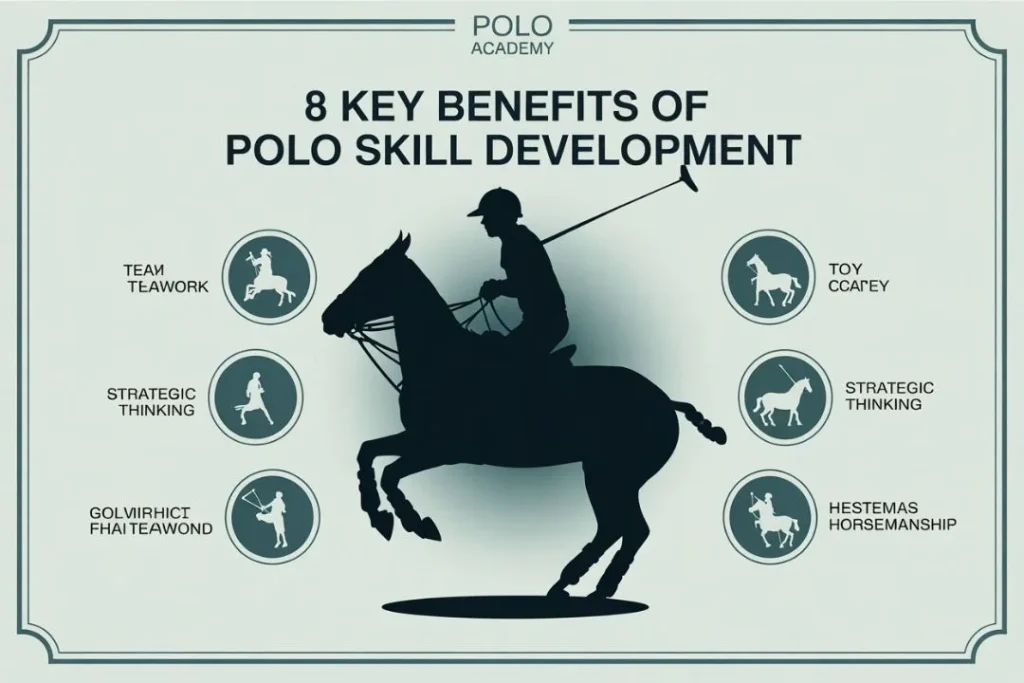
Improvement in physical fitness
Playing polo requires a strong physique. Training involves physical activities such as balancing on a horse, handling a pole, and running, which make the body fully fit.
Mental agility and quick decision-making
Polo Skill Development sharpens a player’s mind because they have to make quick decisions during the game. Which shot to take? Where to stop? All these things keep the mind active.
Increased confidence
Playing fast-paced sports on horseback builds self-confidence. This training also helps in personal development.
Teamwork ability
Polo is a team game. During skill development, players learn how to play with each other, which also improves teamwork and social relationships.
Discipline and punctuality
Training for this sport involves strict discipline. Arriving on time, wearing a uniform, and following established rules instills discipline in a player’s behavior.
Acquiring rare sports skills
Polo is a unique and underplayed sport. Learning its skills gives an individual a distinct identity that can lead to future career or coaching opportunities.
Horse contact and love
In this sport, training and bonding with the horse are important. During skill development, a person also develops the habit of loving and caring for animals.
Professional career opportunities
By learning polo skills, players can compete in local or international tournaments, coach, or find employment in the sports industry.
8 Potential Pitfalls of Polo Skill Development
High cost
Polo is an expensive sport. Horse care, coaching, uniforms, and other amenities are quite expensive, which is not something everyone can afford.
Risk of accidents and physical injuries
Polo Skill Development involves the risk of injury during rigorous practice. Falling off a horse or colliding with another player is common.
Weather restrictions
This sport is mostly played in the open field, so training may be affected by rain or extreme heat.
Stress and exhaustion
Constant practice and physical exercises can lead to mental fatigue and stress, especially if a balanced routine is not followed.
Very time-consuming
Polo Skill Development requires several hours of practice daily, which may affect other academic or personal tasks.
Environmental impact
Sometimes this sport also has a negative impact on the environment, such as land erosion or noise pollution, etc.
Legal and insurance issues
In many countries, playing polo requires specific licenses, insurance, and safety measures, the complexities of which can create problems.
Increasing social class differences
Because polo is a royal and expensive sport, its training may be limited to the wealthy class, which may affect equality in sports.
Polo Skill Development – FAQs (Frequently Asked Questions)
What is Polo Skill Development?
Polo Skill Development refers to the training process through which players acquire the skills to play polo. It includes horse riding techniques, pole control, teamwork, balance, quick decision-making, and physical fitness. This training is not limited to learning the game but is a means of complete physical, mental, and social development.’
Is it possible for ordinary people to learn polo?
Yes, but with some conditions. Learning polo requires special facilities, horses, coaches, and time. The sport is certainly expensive, but now many polo clubs and sports academies are providing packages and programs that are accessible to the general public. If you want to learn seriously, you can start from the basic level and move forward.
What is the age limit to start Polo Skill Development?
Polo training can usually begin at the age of 10, but some clubs accept children as young as 8. Although polo is a physically demanding game, with proper safety measures and step-by-step training, anyone of any age can master it.
What does polo training involve?
- Polo Skill Development includes the following training:
- Practice of riding and maintaining balance
- Control of the ball with the polo stick (mallet)
- Ability to make decisions during high speed
- Physical fitness, especially strength of the legs, arms and core muscles
- Teamwork and communication skills
- Training in horse care and bonding
Does playing polo pose a risk of physical injury?
Yes, because polo is a fast-paced and physical game in which horses and players are constantly in motion, there is a risk of injury. However, this risk can be reduced with modern training, protective gear (helmets, knee pads, boots, etc.), and the supervision of experienced coaches. It is important to follow safety rules during training.
Can women also learn polo?
Of course, women can participate in polo and gain expertise just like men. There are many female polo players around the world who have achieved success at the international level. Many clubs also offer classes and training programs specifically for women. Gender equality is strongly encouraged in polo.
What are the best places in Pakistan for polo training?
There are several famous and high-quality polo clubs in Us for polo training, some of which are:
- us Polo Club
- Cachigo Polo Club
- Atlanta Polo and Riding Club
- Gilgit and Chitral tournaments (especially the Shandur Festival)
- These places not only teach polo but also organize international level events.
What are the career opportunities after learning polo?
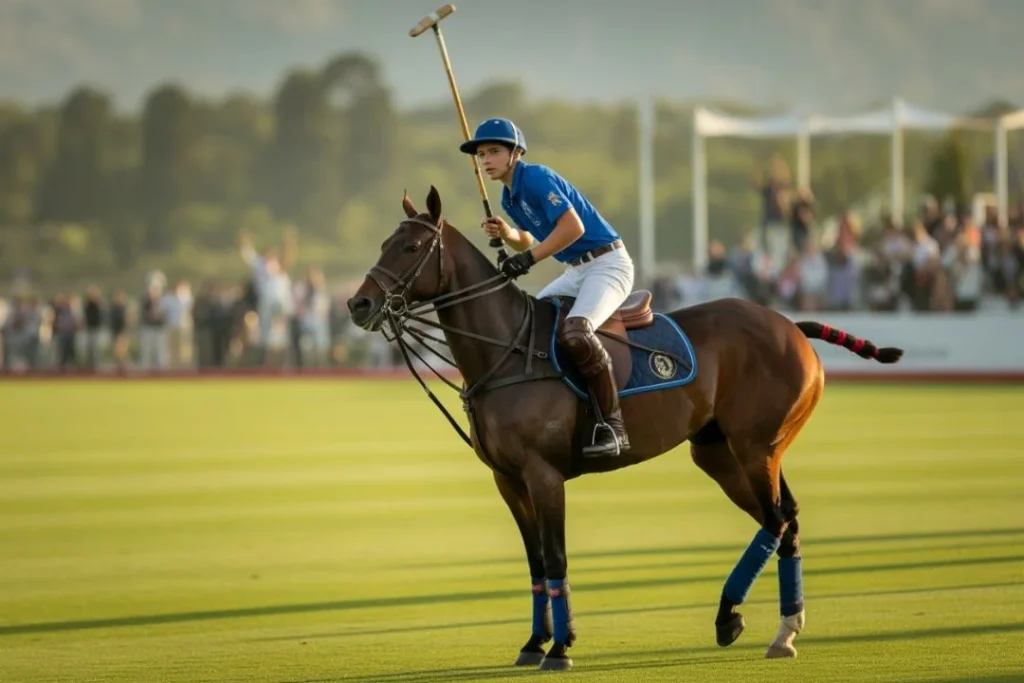
There are many career opportunities available after Polo Skill Development, such as:
- Becoming a professional polo player
- Sports coaching or trainer
- Horse training
- Sports management
- Participating in international tournaments
- Starting a polo club or academy
- All these opportunities not only fulfill the hobby but can also be a source of financial benefits.
(Conclusion)
Polo Skill Development is not just about learning a game, but it is a complete personality development process. Polo training not only makes a person physically strong but also mentally agile, self-confident, and disciplined. Through this game, skills like teamwork, decision-making, and leadership are revealed in an individual, which can be a source of success in every aspect of life.
Although polo training also involves some challenges and disadvantages, such as financial costs, risk of injury, and lack of time, if it is learned with the right guidance, safety, and dedication, the sport can turn into not only a hobby but also a successful professional career.
In conclusion, it can be said that Polo Skill Development is a golden opportunity for those who are interested in unique, royal and challenging sports. If you want to improve your physical health, mental capacity and leadership skills, then polo training can be a great choice for you.